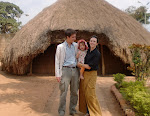
Episcopal Church of Sudan HQ
Picture of our room in Juba
The Nile


 Reconcile believes strongly in the fundamental role the church has in providing practically as well as spiritually for its communities. Our vision is to work directly with local organisations and particularly the church, in areas that have been affected by conflict, supporting and facilitating their missions to their local communities to increase development as a way of reducing conflict.
.JPG)

Picture1: the main streets of Malakal during the rainy season
Picture 2: The bread Shop from my front door
Dear All,
This is my third return to Malakal this year since we left having spent a year living here and I am continually stuck by the changes. And it is not just that things are changing, as everywhere things change, but how quickly they seem to be changing and dare I say it improving.
In expectation of the rains which inflict themselves upon this area between June and September every year, the UN, International and Local NGOs and the Government have been begun to replace the long since disappeared British (circa 1930's) street drainage system. In the main market this has meant brick lined culverts have appeared Suring up what is left of the road and amazingly making them passable even in the hardest rain. For the rest of town a lone big digger is trawling the streets, an automatic beast of mercy, cutting channels wherever it goes to guide the water which will not seep into the land down to the river. Although a small step by most standards, for Malakal this is a huge milestone, for if the stagnant water that sits after the rains can be disbursed it will not only make movement of people and goods possible but remove the breeding ground for the mosquitoes which thrive during August sending Malaria through the roof.
You will see from the photo of the route from the front door where I stay to my shop which I must traverse every morning to get fresh bread for breakfast that the curse of Malakal is mud. Malakal was never intended as a place for people to live. The tribes of the area, both Shilluk and Dinka never settled the area in major numbers knowing that in affect it was a swamp, they preferred the high ground further in land, and across the river to the North. However when the British looked for a resting place while traversing the Nile towards the impenetrable Sud Malakal seemed the perfect spot. Its location just North of the entrance to the Sobot river and just before the Nile begins its course through into the swamps seemed ideal. The land at the rivers edge where the Government buildings were placed is slightly raised and gave good access to the river. However once but 100 metres in from the river bank the land descends almost imperceptibly but those few centimetres make the difference between dry and wet, in a real sense often the difference of life and death during the long rains. Coupled with this the nature of the soil of Malakal known as 'Black Cotton' means that it does not absorb the all the water, it settles on top in large puddles attracting infection and disease. Added again to this is the soils quality of glue likeness, sticking with an iron hold to everything that touches it (except for the most part the barefoot) and refuses to let go. The walk to the shop becomes a workout of mr universe proportions with great balls of mud collecting and being carried along with you.
So as I arrived now in August life has ground to a halt, no cars move, no donkey carts pass, just those people who must venture out to complete those tasks that cannot wait until its truly dry. Now this is of course a mixed blessing for the cool winds that signal the rains which come coupled with a dark yet iridescent sky are one of the true havens of Malakal. For once you have endured the heat and sweat of February through to June to feel that first wind of change is like a wake up call to life, suddenly as the temperature plummets from 45-50 Celsius to 20 Celsius you realise how life can be lived and rejoice.
But of course there is also another story within this for as I am struggling with my bag to traverse the lake which is encircling the place I will stay for my time in Malakal I pass the church and diocesan office and take rest. And in this moment of rest I hear the first news of the projects that we support and am amazed to hear that in this time of mud and rain and difficulty they are on track and well over 50% complete, new classrooms built and new water systems installed. They refuse to be held down by the environment, and by the apathy that has infected so much of post war life. They want change, and they are not the only one, and it is change they are making happen, school by school, child by child.
Every Blessing
Simon


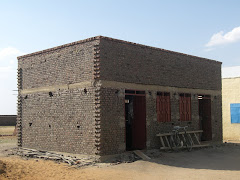
 Picture 1: Khorfulus School - currently constructing they're a food store, pit latrine, a new classroom and verandas.
Dear All,
We had aimed to start early to get the boat loaded for the visit to Khor Fulus, the second school of Malakal Diocese. The mud however is here with a vengeance still following the heavy rains of last Sunday, which according to the news reports were the most torrential in years.
The porter, a small man struggled to bring the horse and cart as close to the materials as possible but feared that once stuck in the mud the cart would be lost until it dries (maybe two months from now). So he became the cart, and carried the cement, iron and welding equipment to the road where the horse stood safe. This took three hours and was but only a small element of the days journey. Once cargo was safely at the water edge the process of loading the boat began, quicker by far but as a large generator had now joined the multitude of items to be carried to Khor Fulus it was not without incident.
However by 12.30 once boat driver was found and wounds of the injured (casualties of the ten man triumph which lifted the generator into the boat) were bandaged we set off. The boat is Malakal made, which means that it is welded of iron and looks improbably heavy for its size, but it began to carry us down river along the Nile to the junction of the Sobot were we bear East. The river was swollen with the rains of Ethiopia and the lands of Southern Sudan but it remained calm and the sun shone hard.
After over an hour, and almost half way through the journey a strange towering crane can be seen on the sky line, with steel framed structures bare beside. It looks from a distance as if a business district is being begun in the most unlikely of places. As we come closer and it becomes clear what a first sight seems modern and incongruous on the landscape has been here for some time. We pass the village of which no name is clear but has grown itself around and within the remnants of what was the end point (or start point) of the dream of a Jonglei Canal. The canal original envisaged to by pass the to the East the massive swap known merely as The Sud was never finished. All that remains are broken machinery helpfully left to prove the foundation of a community which now live within and around the strange steel beasts of progress tamed and lying dormant at the water edge. They mess seamlessly together as if bound from birth.
This point also marks the beginning of the chicane of fishing nest which criss cross the river, lain by waiting fishermen. The nets prove almost completely concealed by the water but for the strange regularity of floating sticks which hold them up. Progress becomes slow yet the switch from the great Nile to the smaller Sobot brings with it a thronging waterside almost no part of which is now not owned by virtue of a mud hut being placed near by.
This mass of people that has descended or appeared on this stretch of water is thanks mostly to the founding of Khor Fulus. Khor Fulus was in history not known as a place in itself but merely a crossing point for those going South to Bor. However the war has made it a place of significance and now due to its designation as a congregation point for soldiers of the SPLA (Sudan Peoples Liberation Army) it thrives. As with all boom, without order it goes bust and for most of this year it has suffered continued upheaval as the army is reordered and brought under control. In January almost the whole community was set in flight by the rampage of discordant militia at odds with the Police and not controlled by the army which is supposed to be responsible for them.
Thankfully now life is returning so some sense of normality and as we docked at the Episcopal Church compound the school was massed with children singing and drumming. At first I thought it must have been an elaborate welcome but no, my ego was put back in place they didn't even know we were coming as no phones work in the area and our trip was out of the blue. Once the excitement of our groups presence had been quelled and we left to inspect the new classrooms and latrines the group returned to itself and the games began. They had come on Saturday, as had the teachers simply to sing, dance and play games. On Sunday they all return again to Church. Everyday, the school - which when I last visited over a year ago was being used as a hospital to treat cholera suffers- sits right at the centre of these children's lives at the heart of the community, giving education and hope.
The time was already after 4 and although I had only been in Khor Fulus an hour we needed to start for Malakal if we were to make it before dark. So rather than await the hired boat that was being unloaded and could take along time the Diocesan boat was called forth. This was the same boat and driver with whom almost exactly a year ago I was stranded for three days up river and once the boat had finally given up i'd had to walk the final 5 miles back to Malakal. I was apprehensive to say the least to re-enter the boat I had vowed while floating in the dark away from home that I would not re-enter if I escaped safe. yet the options were none and the day was drawing on, not to mention the thunder clouds were drawing in, so we set off.
The rain came but thankfully just had the driver had learnt (how to use a boat)from that previous first voyage we took together so had I and remembered a rain coat. We arrived untroubled in Malakal as the sun set low in the west gilding the clouds erupted after the rain. As the final light took flight I walked angle deep in mud broken sandals in hand to the house thankful to be back in a day and blessed to have seen what I saw.
Blessings
Simon