Dear All,
We have been back in Malakal now for over a week and on Monday we made a trip out to one of the ECS school building sites in the town of kodok, we were luck enough to be able to tag along with a UN trip to take the British and French ambassadors there. This trip had been arranged so that the ambassadors could visit the site of the Fashoda incident – In a nut shell in case you didn’t know (I didn’t) A French force set out from Brazzaville under Major Jean-Baptiste Marchand with orders to secure the area around Fashoda as a French protectorate. After a long trek across central Africa Marchand’s expedition arrived in Fashoda (now Kodok) in 1898. However Sir Horatio Kitchener also arrived there and both sides insisted on their right to Fashoda. News of the meeting reached Paris and London, a crisis erupted and both nations began to prepare their fleets for war. It was resolved however when the French government decided they didn’t want to start a war with Britain and ordered its soldiers to withdraw. The ambassadors wanted photos where the stand off took place.
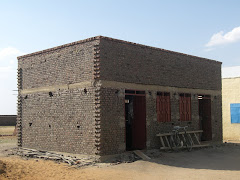
We were also able to visit the site of the new ECS school which is now in its early building stages, its taken a while to get started as the diocese prioritised the school they are building in Riang as its not accessible during the rains where Kodok is. We were able to fill the ambassadors in on the Episcopal Churches work in school building and education, I have attached a pic of the Group standing at the school site - Pic from left to right – Joseph Nding - Commissioner of Police for Fashoda County, Peter Maxwell – Head of the UN Mission in Sudan Sector 3, Zachariah – Director of Education for Fashoda County and ECS congregant member , British Ambassador Ian Cliff, Simon, Mme Robichon - French Ambassador, the next two men work for Fashoda County’s commissioner, John Chol – Episcopal Church Pastor for the area.)
I have also included a pic of Kodok Town – if you can believe it, I actually took it in the town centre.
Friday, 11 May 2007

Sudan Update 5
Dinka Christianity
Many of the people we work with in the Episcopal Church of Sudan are Bor Dinka, People of the Dinka tribe who originate from the place called Bor in Jongli State. The Dinka of Bor’s conversion to Christianity is fascinating; of all the tribal groups in South Sudan they represent the most complete religious transformation anywhere in Sudan in current times. There has been an almost total conversion of a people to a Christian identity within a 10 year period.
This seems to stem from the fact that the Bor Dinka probably suffered a more intense and complete destruction of their traditional culture and ways of life than any other people in South Sudan during the civil war. Government assaults and large scale Nuer cattle raids (Nuer are another Sudanese tribal group) in the early 90’s caused the total obliteration of the Bor Dinka cattle herds and consequently their livelihoods and very culture (cattle were fundamental to Dinka life, providing their livelihood, food and wealth). The majority of people were displaced into other areas and refugee camps where many remain today.
This experience led to a total revulsion against their traditional shrine spirits and resulted in the widespread destruction of all artefacts used for traditional religious practices. In February 94 in the town of Bor a vast number of these artefacts were collected together inside the church there and destroyed. Isaiah 18 became a key text of the Bor Dinka church’s identity as it holds a prophecy about Kush (translated ‘Sudan’ in the Good News Bible) which describes both suffering and eventual redemption and a turning to God.
We have just returned from a break in Egypt to Khartoum and plan to travel back to Malakal this week.
Will be in touch again soon
Best wishes
Keren
Many of the people we work with in the Episcopal Church of Sudan are Bor Dinka, People of the Dinka tribe who originate from the place called Bor in Jongli State. The Dinka of Bor’s conversion to Christianity is fascinating; of all the tribal groups in South Sudan they represent the most complete religious transformation anywhere in Sudan in current times. There has been an almost total conversion of a people to a Christian identity within a 10 year period.
This seems to stem from the fact that the Bor Dinka probably suffered a more intense and complete destruction of their traditional culture and ways of life than any other people in South Sudan during the civil war. Government assaults and large scale Nuer cattle raids (Nuer are another Sudanese tribal group) in the early 90’s caused the total obliteration of the Bor Dinka cattle herds and consequently their livelihoods and very culture (cattle were fundamental to Dinka life, providing their livelihood, food and wealth). The majority of people were displaced into other areas and refugee camps where many remain today.
This experience led to a total revulsion against their traditional shrine spirits and resulted in the widespread destruction of all artefacts used for traditional religious practices. In February 94 in the town of Bor a vast number of these artefacts were collected together inside the church there and destroyed. Isaiah 18 became a key text of the Bor Dinka church’s identity as it holds a prophecy about Kush (translated ‘Sudan’ in the Good News Bible) which describes both suffering and eventual redemption and a turning to God.
We have just returned from a break in Egypt to Khartoum and plan to travel back to Malakal this week.
Will be in touch again soon
Best wishes
Keren
Wednesday, 21 March 2007
Sudan Update 4
Dear All,
We have been back in Malakal for about two weeks now, we came back to find the classroom building at Malakal Basic school had begun which was great to see. However the diocese have had a few problems getting started on the building of the other two school which are out in two rural communities. All the materials have to come to Malakal by barge from a town called Kosti, they then have to be taken by boat and road to the building sites. There’s been a bit of a delay in them arriving here so the labourers in the communities have not been able to begin. The Diocese have just purchased a donkey and cart for the community in Riang as they are far from the Nile, this will help to bring water to mix with mud for the school walls and will then be used to bring river water for the school children.
There are lots of issues the diocese needs to be dealing with in order to build and run these schools and we are assisting them in managing these things which range from helping them to account for everything spent on labour and materials for the building work to making applications to the World Food programme for Food For Work (food to pay unskilled labourers to help with building) and applications for food distributions for the school children. We are in contact with UNICEF regarding school equipment distributions, Simon is putting together an accounts system for the diocese, we are also looking into starting up a boat project to enable the diocese to provide transport to some of the more remote communities in the diocese and would create some much needed income.
Malakal is in some ways almost medieval in feel – I think it’s the way the living quarters are split up. The whole family and sometimes extended family will often live in one or two rooms and then they will have a separate mud hut which is the kitchen where the women will cook often over coal, then there will be a little rukuba – grass/bamboo walled area which you can go behind with a bucket of river water to wash in. Maybe there will be a pit latrine and then one outside tap pumping river water to the compound. Babies, cows, chickens, goats, cats and rats roam freely between house and garden. The bishop has recently acquired a generator which is on after dark but many people don’t have this luxury. Power in the town is sporadic, sometimes a few hours every day sometimes days go by without any. We stayed at the bishops home for a while but decided to move out after the temperature was regularly hitting 50 degrees C and with hardly any electric and occasional water I was getting very ill with heat exhaustion. Some days here it has felt like we’re just surviving rather than getting any work done, luckily we found a room at the Oxfam guest house which we think we will stay in until our house renovations are finished.
Everyone seems to be getting ill at the moment, Cholora has hit town and 16 people have already died. People drink water from the Nile without boiling it so we’re not sure if it will turn into an endemic. Two of the bishop’s children have been ill and in hospital, poor baby David has just been diagnosed with malaria – we pray that he will be ok.
I attach some pics of Malakal and will be putting them and others onto our myspace sight when I am next in Khartoum. There is an update on the site about Renk which I did not send out as I don’t want to bombard you all. You can get onto the site through www.myspace.com/reconcileconsulting
Will be in touch again soon
Keren x
We have been back in Malakal for about two weeks now, we came back to find the classroom building at Malakal Basic school had begun which was great to see. However the diocese have had a few problems getting started on the building of the other two school which are out in two rural communities. All the materials have to come to Malakal by barge from a town called Kosti, they then have to be taken by boat and road to the building sites. There’s been a bit of a delay in them arriving here so the labourers in the communities have not been able to begin. The Diocese have just purchased a donkey and cart for the community in Riang as they are far from the Nile, this will help to bring water to mix with mud for the school walls and will then be used to bring river water for the school children.
There are lots of issues the diocese needs to be dealing with in order to build and run these schools and we are assisting them in managing these things which range from helping them to account for everything spent on labour and materials for the building work to making applications to the World Food programme for Food For Work (food to pay unskilled labourers to help with building) and applications for food distributions for the school children. We are in contact with UNICEF regarding school equipment distributions, Simon is putting together an accounts system for the diocese, we are also looking into starting up a boat project to enable the diocese to provide transport to some of the more remote communities in the diocese and would create some much needed income.
Malakal is in some ways almost medieval in feel – I think it’s the way the living quarters are split up. The whole family and sometimes extended family will often live in one or two rooms and then they will have a separate mud hut which is the kitchen where the women will cook often over coal, then there will be a little rukuba – grass/bamboo walled area which you can go behind with a bucket of river water to wash in. Maybe there will be a pit latrine and then one outside tap pumping river water to the compound. Babies, cows, chickens, goats, cats and rats roam freely between house and garden. The bishop has recently acquired a generator which is on after dark but many people don’t have this luxury. Power in the town is sporadic, sometimes a few hours every day sometimes days go by without any. We stayed at the bishops home for a while but decided to move out after the temperature was regularly hitting 50 degrees C and with hardly any electric and occasional water I was getting very ill with heat exhaustion. Some days here it has felt like we’re just surviving rather than getting any work done, luckily we found a room at the Oxfam guest house which we think we will stay in until our house renovations are finished.
Everyone seems to be getting ill at the moment, Cholora has hit town and 16 people have already died. People drink water from the Nile without boiling it so we’re not sure if it will turn into an endemic. Two of the bishop’s children have been ill and in hospital, poor baby David has just been diagnosed with malaria – we pray that he will be ok.
I attach some pics of Malakal and will be putting them and others onto our myspace sight when I am next in Khartoum. There is an update on the site about Renk which I did not send out as I don’t want to bombard you all. You can get onto the site through www.myspace.com/reconcileconsulting
Will be in touch again soon
Keren x
Wednesday, 7 March 2007
Sudan Update 3
Renk
Renk is a small town which boarders north and south Sudan and the communities here were amongst those hardest hit by civil war. Because of its geographical position it has been a gathering point for many internally displaced persons or returnees and people continue to be particularly vulnerable on account of human and food security issues.
After receiving the Bishop of Renk’s blessing to visit we went for 3 days to see the schools and facilities that currently exist in Renk town and to speak with those who work for the diocese. It is looking likely that Renk diocese will receive funding for further school building and when the project starts we hope to assist them in managing the process.
Providing schools is a priority for the church, a consequence of Sudan’s long civil war is that southern Sudanese have the lowest access to education in the world, there are so few schools that the government is struggling to build enough to meet the massive need. Gross primary enrolment is at 20% with less than 2% of people completing primary education. An estimated 60% of the Southern Sudanese population is under 18 years old.
We had a very productive time and felt we were able to identify some key needs with the people we spoke to. I think people were surprised by how young we were, we kept being referred to as ‘the boy and his madam’. We stayed in a lovely mud hut at the ECS Renk Guest house and eat some fairly unusual meals (one being packet custard and rice). Every building in Renk town centre for some reason is bright green, desertification seems to be an issue – I’ve never seen so much dust, when the wind is up you get ‘haboob’ – sandstorms and I barely managed the walk into town before breaking into a coughing fit.
You can see some pictures of Renk in the picture gallery.
We have just completed our first session which was mostly focusing on assessing keys needs for the two dioceses. We return to Malakal on Thursday for a month before travelling to Renk again, we hope to be able to move into our accommodation in Malakal soon but for now will be staying again with the Bishop and his family.
Will be in touch again soon
Best
Keren and Simon x
Renk is a small town which boarders north and south Sudan and the communities here were amongst those hardest hit by civil war. Because of its geographical position it has been a gathering point for many internally displaced persons or returnees and people continue to be particularly vulnerable on account of human and food security issues.
After receiving the Bishop of Renk’s blessing to visit we went for 3 days to see the schools and facilities that currently exist in Renk town and to speak with those who work for the diocese. It is looking likely that Renk diocese will receive funding for further school building and when the project starts we hope to assist them in managing the process.
Providing schools is a priority for the church, a consequence of Sudan’s long civil war is that southern Sudanese have the lowest access to education in the world, there are so few schools that the government is struggling to build enough to meet the massive need. Gross primary enrolment is at 20% with less than 2% of people completing primary education. An estimated 60% of the Southern Sudanese population is under 18 years old.
We had a very productive time and felt we were able to identify some key needs with the people we spoke to. I think people were surprised by how young we were, we kept being referred to as ‘the boy and his madam’. We stayed in a lovely mud hut at the ECS Renk Guest house and eat some fairly unusual meals (one being packet custard and rice). Every building in Renk town centre for some reason is bright green, desertification seems to be an issue – I’ve never seen so much dust, when the wind is up you get ‘haboob’ – sandstorms and I barely managed the walk into town before breaking into a coughing fit.
You can see some pictures of Renk in the picture gallery.
We have just completed our first session which was mostly focusing on assessing keys needs for the two dioceses. We return to Malakal on Thursday for a month before travelling to Renk again, we hope to be able to move into our accommodation in Malakal soon but for now will be staying again with the Bishop and his family.
Will be in touch again soon
Best
Keren and Simon x
Monday, 5 March 2007
Sudan Update 2
Dear All,
Another (much shorter you’ll be glad to see) update,
Before leaving Malakal we were invited to a memorial service for a man who died one year ago in a rather nasty cattle rustling incident. We didn’t manage to work out if he was the rustler or the owner of the cattle being rustled. The service consisted of family and friends standing up and eulogising in between songs and prayers for the family left behind (sadly a wife and 5 children). We then went to the widows home; all the men (including myself) went to eat while the women served the food and then waited until we were half way through before taking some of the food for themselves and eating it away from us. Everywhere we go we are served coca cola – called ‘mobile’ in Sudan, it holds the same value as alcohol does in the UK if you were having friends around for dinner. I unfortunately hate coke but people are very insistent that you knock it back and just when you were feeling relieved and proud that you managed to get through it without feeling sick or burping you are presented with another one!
I also had an opportunity to meet with some of the members of Malakal’s Mothers Union – I explained that me and Simon were married and had come to support the churches development projects in their area and was interested in finding out what they were doing to see if I could assist them in some way. However, I made the mistake of telling the women I had been married for 5 years at which point all anyone wanted to discuss was – did I have any children? Why not after such a long period of time? Did I want children? Would I have a child this year? They would pray for me. I thanked them and hope to find out a little more at their next meeting.
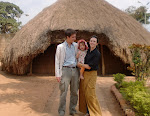
After over a week back in Khartoum trying to arrange our trip to Renk, we were granted permission by the Bishop of Renk on Saturday and by Wednesday were on the bus. Our expectations of this bus journey were fairly low, however, instead of the overcrowded, hot, bumpy journey we were expecting we found ourselves on an air-conditioned coach travelling along a tarmac road. Not only this but no sooner had we boarded when breakfast and drinks started to be served and even a kung foo movie with Arabic subtitles to enjoy. I have attached a picture of the kind of views on the way as well as pics of me in Khartoum earlier this week and of Simon this morning sitting in front of the tukul we are staying in here in Renk.
Will e-mail again soon
Keren x
Another (much shorter you’ll be glad to see) update,
Before leaving Malakal we were invited to a memorial service for a man who died one year ago in a rather nasty cattle rustling incident. We didn’t manage to work out if he was the rustler or the owner of the cattle being rustled. The service consisted of family and friends standing up and eulogising in between songs and prayers for the family left behind (sadly a wife and 5 children). We then went to the widows home; all the men (including myself) went to eat while the women served the food and then waited until we were half way through before taking some of the food for themselves and eating it away from us. Everywhere we go we are served coca cola – called ‘mobile’ in Sudan, it holds the same value as alcohol does in the UK if you were having friends around for dinner. I unfortunately hate coke but people are very insistent that you knock it back and just when you were feeling relieved and proud that you managed to get through it without feeling sick or burping you are presented with another one!
I also had an opportunity to meet with some of the members of Malakal’s Mothers Union – I explained that me and Simon were married and had come to support the churches development projects in their area and was interested in finding out what they were doing to see if I could assist them in some way. However, I made the mistake of telling the women I had been married for 5 years at which point all anyone wanted to discuss was – did I have any children? Why not after such a long period of time? Did I want children? Would I have a child this year? They would pray for me. I thanked them and hope to find out a little more at their next meeting.
After over a week back in Khartoum trying to arrange our trip to Renk, we were granted permission by the Bishop of Renk on Saturday and by Wednesday were on the bus. Our expectations of this bus journey were fairly low, however, instead of the overcrowded, hot, bumpy journey we were expecting we found ourselves on an air-conditioned coach travelling along a tarmac road. Not only this but no sooner had we boarded when breakfast and drinks started to be served and even a kung foo movie with Arabic subtitles to enjoy. I have attached a picture of the kind of views on the way as well as pics of me in Khartoum earlier this week and of Simon this morning sitting in front of the tukul we are staying in here in Renk.
Will e-mail again soon
Keren x
Thursday, 15 February 2007
Sudan Update 1
Khartoum
Although we only came here just over a week ago, it really feels like we’ve already been away for months – this could be interpreted as good or bad (there are plenty of both in Sudan). Khartoum where we spent our first few days is more African than Middle Eastern, although Arabic is written and spoken everywhere and you can pick up falafel and swarma’s on many a street corner, life seems to move at a snails pace and like in Nigeria you are incredibly dependant on other people to get things sorted -you always need to form relationships with local people quickly so they can sort them out for you such as trying to get hold of our freighted luggage (a now long running issue that seems to have needed at least five people to rectify). Apparently Sudan is the most bureaucratic country in the world! You need a permit to do almost anything from travelling around to taking photos and this all takes time, however, the atmosphere in Khartoum is very friendly and relaxed and although you can’t always get the amount of work done you might have hoped, there is always someone on the street who is keen to stop you and tell you their life story.
Malakal
To reach Malakal is not particularly easy - all of South Sudan is very much in the early stages of being a post-conflict environment and you can only really reach Malakal by flying with WFP (the World Food Programme) and these flights are restricted to UN and NGO workers. Civil war raged across the South almost continuously from Sudan’s independence in 1956 until the Comprehensive Peace Agreement was signed in 2005 making it Africa’s longest running conflict, UNMIS (United Nations Mission in Sudan) has a base here and there are around 3000 peace keeping troops stationed in the area. First impressions of Malakal - Heat, Dust and Insects – lots of them! Every time you walk out the word Khawaja echoes around the streets, in Arabic meaning ‘foreigner’. Everyone we meet is convinced we are brother and sister (twins) and we have even been asked if we are father and daughter (this came as a bit of a shock!), maybe we are also related to all the other white people in town as we all look the same to many people.
We have been staying with the Bishop of Malakal and his family, he is a Dinka Bor and many of his team who we shall also be working with are Dinka. He and his wife have seven lovely children, there are however over 20 extended family members staying in his home some who have to sleep outside. It’s taking time to get used to using pit latrines! especially ones which barely hide you from the view of others. I think I’ll be constantly trying to find excuses to go and see the UN in order to use their fully flushing toilet complete with toilet paper and working taps. People eat twice a day, usually at 11am, usually bread and fuul (beans) with some onion and maybe cheese and them some time in the evening – this has been things like semolina with rice and milk, sometimes a meat broth with a dough-like starch based carbohydrate. We are always made to eat separately from the family – we are told it is traditional for guests to eat alone, I feel that maybe part of this is that the food we are being served is better than that which the family eat. The bishop has so many pulls on his time, there are constantly people here asking for help, his wife Rebecca works incredibly hard, looking after seven children, running a small tea shop and having to provide food for the 20 odd relations who seem to live here on and off and other visitors including ourselves.
The school building program, part of which it is our work to support consists of building 2 schools in two remote areas of the diocese and adding some classrooms to Malakal Basic school which is in the town itself. We have spent the week meeting and getting to know everyone involved in the programme. We have been eating at different peoples homes most evenings, usually congregant members, unfortunately very few of them speak English and I find the Arabic here really hard to understand so we sometimes end up all sitting around looking at each-other in silence. Logistics are very hard here, getting the smallest thing done at all let alone at an agreed time is almost impossible. 2 favourite words in Sudan are undoubtedly inshalla (God Willing) and bokra (tomorrow), meetings and arrangements are constantly postponed, we have no internet access and are not yet sure how to resolve this. Our mobile phones rarely work so when we need to speak to someone we have found ourselves searching the town trying to track them down. Looking for accommodation has proved tough, because there is a large UN peacekeeping mission here the price of even the most basic accommodation is very high and there’s very little available. We have been in negotiations for one house and have just secured it but it needs more work doing to it than our budget allows for so when we move in we just hope that it will have a decent roof and secure front door.
We leave Malakal tomorrow hopefully having agreed our work plan for the next few months with the Bishops Team. We will be flying back to Khartoum to try and arrange a long stay visa and then going to Renk for a week, the other diocese where we will be working.
Will be in touch again soon
Keren and Simon x
Although we only came here just over a week ago, it really feels like we’ve already been away for months – this could be interpreted as good or bad (there are plenty of both in Sudan). Khartoum where we spent our first few days is more African than Middle Eastern, although Arabic is written and spoken everywhere and you can pick up falafel and swarma’s on many a street corner, life seems to move at a snails pace and like in Nigeria you are incredibly dependant on other people to get things sorted -you always need to form relationships with local people quickly so they can sort them out for you such as trying to get hold of our freighted luggage (a now long running issue that seems to have needed at least five people to rectify). Apparently Sudan is the most bureaucratic country in the world! You need a permit to do almost anything from travelling around to taking photos and this all takes time, however, the atmosphere in Khartoum is very friendly and relaxed and although you can’t always get the amount of work done you might have hoped, there is always someone on the street who is keen to stop you and tell you their life story.
Malakal
To reach Malakal is not particularly easy - all of South Sudan is very much in the early stages of being a post-conflict environment and you can only really reach Malakal by flying with WFP (the World Food Programme) and these flights are restricted to UN and NGO workers. Civil war raged across the South almost continuously from Sudan’s independence in 1956 until the Comprehensive Peace Agreement was signed in 2005 making it Africa’s longest running conflict, UNMIS (United Nations Mission in Sudan) has a base here and there are around 3000 peace keeping troops stationed in the area. First impressions of Malakal - Heat, Dust and Insects – lots of them! Every time you walk out the word Khawaja echoes around the streets, in Arabic meaning ‘foreigner’. Everyone we meet is convinced we are brother and sister (twins) and we have even been asked if we are father and daughter (this came as a bit of a shock!), maybe we are also related to all the other white people in town as we all look the same to many people.
We have been staying with the Bishop of Malakal and his family, he is a Dinka Bor and many of his team who we shall also be working with are Dinka. He and his wife have seven lovely children, there are however over 20 extended family members staying in his home some who have to sleep outside. It’s taking time to get used to using pit latrines! especially ones which barely hide you from the view of others. I think I’ll be constantly trying to find excuses to go and see the UN in order to use their fully flushing toilet complete with toilet paper and working taps. People eat twice a day, usually at 11am, usually bread and fuul (beans) with some onion and maybe cheese and them some time in the evening – this has been things like semolina with rice and milk, sometimes a meat broth with a dough-like starch based carbohydrate. We are always made to eat separately from the family – we are told it is traditional for guests to eat alone, I feel that maybe part of this is that the food we are being served is better than that which the family eat. The bishop has so many pulls on his time, there are constantly people here asking for help, his wife Rebecca works incredibly hard, looking after seven children, running a small tea shop and having to provide food for the 20 odd relations who seem to live here on and off and other visitors including ourselves.
The school building program, part of which it is our work to support consists of building 2 schools in two remote areas of the diocese and adding some classrooms to Malakal Basic school which is in the town itself. We have spent the week meeting and getting to know everyone involved in the programme. We have been eating at different peoples homes most evenings, usually congregant members, unfortunately very few of them speak English and I find the Arabic here really hard to understand so we sometimes end up all sitting around looking at each-other in silence. Logistics are very hard here, getting the smallest thing done at all let alone at an agreed time is almost impossible. 2 favourite words in Sudan are undoubtedly inshalla (God Willing) and bokra (tomorrow), meetings and arrangements are constantly postponed, we have no internet access and are not yet sure how to resolve this. Our mobile phones rarely work so when we need to speak to someone we have found ourselves searching the town trying to track them down. Looking for accommodation has proved tough, because there is a large UN peacekeeping mission here the price of even the most basic accommodation is very high and there’s very little available. We have been in negotiations for one house and have just secured it but it needs more work doing to it than our budget allows for so when we move in we just hope that it will have a decent roof and secure front door.
We leave Malakal tomorrow hopefully having agreed our work plan for the next few months with the Bishops Team. We will be flying back to Khartoum to try and arrange a long stay visa and then going to Renk for a week, the other diocese where we will be working.
Will be in touch again soon
Keren and Simon x
Subscribe to:
Posts (Atom)